탄약보다 더 많은 연기가 부츠에 가득 차고 손에는 직접 만든 셰이커가 딸랑거리는 런을 마쳤습니다. 전쟁터에서 거리 공연가의 셰이커를 발견한 기분이었습니다. 당신과 나는 작은 발견이 레이드 느낌을 어떻게 바꾸는지 알고 있습니다.
ARC Raiders의 Shrouded Sky 업데이트 이후 Shaker Instrument가 무작위 운에서 신뢰할 수 있는 현장 제작 도구로 어떻게 이동했는지 알려드리겠습니다. Steam, PlayStation 또는 Xbox에서 필요한 것, 얻을 수 있는 위치, 장비에 중요한 이유를 직접적으로 알려드리겠습니다.
ARC Raiders에서 셰이커를 제작하는 방법
Shrouded Sky 패치 후 세 번째 런에서 팀원들이 목표를 향해 달려가는 대신 보급 상자에서 땜질하는 것을 발견했습니다.
스킬 트리 생존 섹션에서 두 가지 스킬인 땜장이와 인-라운드 제작이 필요합니다. 해당 노드에 포인트를 투자하면 제작 메뉴에 액세스할 수 있는 모든 레이드에서 셰이커를 현장 제작 옵션으로 사용할 수 있습니다.
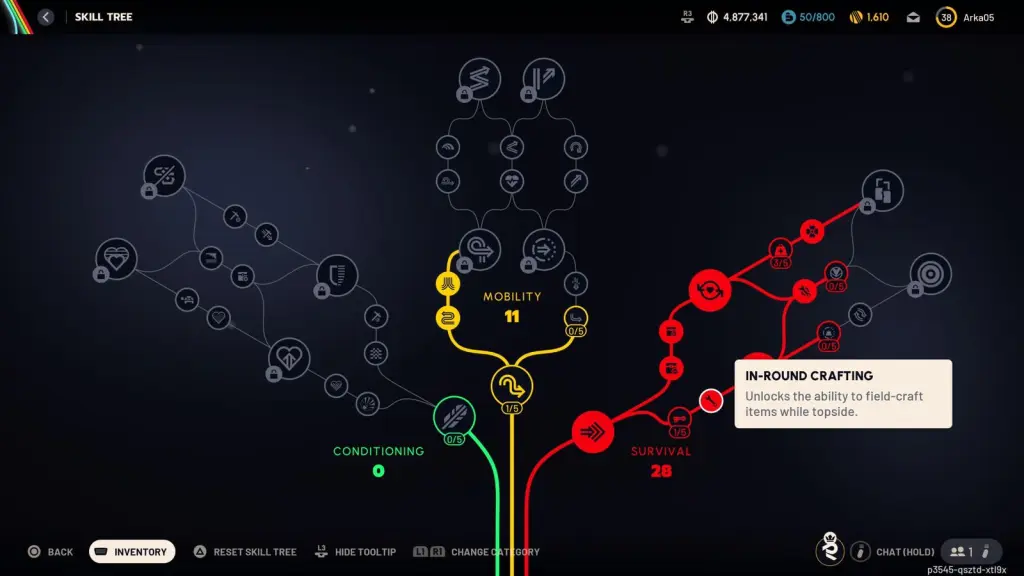
레이드 중에 셰이커를 제작하려면 두 가지 리소스만 필요합니다.
- 7개의 각종 씨앗
- 캐니스터 1개
레이드 도중에 셰이커를 제작할 수 있나요?
예. 땜장이와 인-라운드 제작을 배우면 인-라운드 제작 메뉴를 열고 셰이커를 선택하면 인벤토리에 나타납니다. 미리 준비하고 싶다면 경기 시작 전에 캐니스터와 각종 씨앗을 장비에 넣어 가져갈 수 있습니다.
캐니스터와 각종 씨앗은 어디에서 드롭되나요?
캐니스터는 레이드 맵 주변에 흩어져 있는 흔치 않은 전리품입니다. 보급 상자와 순찰 경로를 확인하세요. 각종 씨앗은 무작위 전리품으로 나타나고 올리브와 레몬과 같은 과일을 폐기할 때 회수 결과로 나타납니다. 망가진 주방과 온실을 5분 동안 검색하면 확률이 눈에 띄게 높아지는 것을 발견했습니다.
제작하려면 특별한 플랫폼이나 DLC가 필요하나요?
여기에는 플랫폼 독점 게이트키핑이 없습니다. Shrouded Sky 업데이트는 PC(Steam), PlayStation 및 Xbox 빌드에 걸쳐 셰이커를 추가했습니다. Discord 또는 Reddit에서 커뮤니티 허브 또는 가이드로 플레이하면 플레이어가 캐니스터를 더 빨리 찾기 위한 스폰 포인트와 팁을 공유하는 것을 볼 수 있습니다.

ARC Raiders에서 셰이커를 사용하는 방법
여러 레이드에서 스쿼드가 싸움 도중에 잠시 멈추는 것을 보았습니다. 셰이커는 종종 그 순간부터 시작되었습니다.
셰이커는 기타와 마찬가지로 순전히 사회적인 목적을 공유합니다. 레이드에서 연주할 수 있는 곡을 연주하지만 적 레이더나 ARC에 대한 전투 이점을 제공하지 않습니다. 만들기가 저렴하고 제작이 빠르며 무해하게 축제적입니다. 무기라기보다는 분위기 도구입니다.
결과를 바꾸지 않고 레이드의 분위기를 건드리는 키트의 작은 부적으로 생각하세요.
Shrouded Sky 업데이트는 또한 두 지도 위치에 피아노를 심었으므로 레이드 음악 세션을 즐기는 경우 팀원과 듀엣을 할 수 있습니다. 커뮤니티 도구(지도 오버레이, 인벤토리 플래너 및 Discord 조정)를 사용하는 플레이어는 세션 초기에 악기를 잡고 더 많은 플레이 시간을 확보하는 경향이 있습니다.
그렇다면 셰이커를 사기 진작용으로 유지할 건가요, 아니면 인벤토리 공간을 위해 버릴 건가요? 그리고 모든 슬롯이 중요한 전술 슈팅 게임에서 음악적 참신함이 중요할까요?
우리의 활동을 지원해주세요 ❤️
이 글이 마음에 드셨다면, 앞으로도 좋은 콘텐츠를 계속 발행할 수 있도록 팁을 남겨주세요.


![THINK: The user wants to translate the title "Catch a Brainrot Tier List & Guide (RELEASE)" into Korean. I need to break down the key terms and concepts in the English title and find their appropriate Korean equivalents.
Catch a Brainrot: This is a playful, internet slang phrase.
"Brainrot" (뇌절) is a common internet slang in Korean, referring to something so cringey, overdone, or nonsensical that it makes your brain "rot" or shut down. It can also mean obsessing over something to an unhealthy degree.
"Catch a Brainrot" could be interpreted as "falling into brainrot," "getting brainrot," or simply "experiencing brainrot."
A common way to express "getting into / falling into [something bad/annoying/overdone]" in Korean internet slang is by using the noun and then implying the action. For example, "뇌절" itself can be used. Or, one might say "뇌절 각" (a situation ripe for brainrot), or "뇌절 유발" (brainrot-inducing).
However, "Catch a Brainrot" here seems to be the topic of the tier list. The tier list is about brainrot. So, maybe just referring to "brainrot" is enough.
Let's consider the nuance. "Catch a Brainrot" implies an action or a state. A tier list for brainrot items/situations.
Perhaps something like "뇌절 요소" (brainrot elements/factors) or "뇌절 유형" (brainrot types).
Or, simply using "뇌절" as the core concept.
If it's about identifying and categorizing different "brainrot" things, then "뇌절" as a concept is central.
"Catch a Brainrot" can be a bit tricky. Does it mean "how to get brainrot" or "how to identify brainrot"? Given the "Tier List & Guide," it's more likely about identifying and navigating different types of brainrot.
Let's try to capture the "catch" part. If it's about identifying or understanding brainrot.
"뇌절" is the direct translation for brainrot.
"잡다" (japda) means "to catch," but "뇌절을 잡다" doesn't sound natural in this context.
"뇌절에 대한" (about brainrot) or "뇌절 알아보기" (understanding brainrot).
Considering "Catch a Brainrot" as a playful, informal title, a direct translation might lose the feel.
Let's focus on what the tier list is. It's a tier list of brainrot-inducing things or brainrot situations. So the focus is on "brainrot."
Just "뇌절" might be sufficient as the object of the list.
Tier List: "티어 목록" (tieo mongnok) or "티어 리스트" (tieo riseuteu) are common. "등급표" (deunggeuppyo) is also possible for "tier list" or "ranking chart." "티어표" (tieopyo) is very common internet slang. "티어표" fits the informal tone better.
& Guide: "&" is often translated as "및" (mit), "그리고" (geurigo), or just omitted and implied by context. "Guide" is "가이드" (gaideu) or "안내서" (annaeseo). "가이드" is more common in such contexts.
(RELEASE): "(출시)" (chulsi), "(공개)" (gonggae), or "(발매)" (balmae). "(출시)" or "(공개)" are suitable for a content release. "(공개)" is perhaps more general for a release of information/content.
Combining them:
Option 1 (Focus on "brainrot" as the subject):
뇌절 티어표 & 가이드 (공개)
(Noejjeol tieopyo & gaideu (gonggae))
Option 2 (Trying to keep "catch"):
Is there a way to say "spotting brainrot" or "understanding brainrot" in a concise, slangy way?
"뇌절 잡기" (noejjeol japgi) - "catching brainrot," but again, "잡기" sounds like a game or a physical action.
"뇌절 포착" (noejjeol pochak) - "detecting/spotting brainrot," but "포착" is a bit too formal.
"뇌절 알아보기" (noejjeol arabogi) - "getting to know brainrot," "learning about brainrot."
"뇌절 공략" (noejjeol gongnyak) - "brainrot strategy/guide," implies how to deal with/understand brainrot. This is often used for game guides. This could fit "Catch a Brainrot Tier List & Guide."
Let's reconsider "Catch a Brainrot." If it's a guide for catching brainrot elements, then "뇌절 공략" or "뇌절 가이드" directly fits the "Guide" part.
The title is "Catch a Brainrot Tier List & Guide."
This implies the Tier List is about catching/understanding brainrot.
Let's break "Catch a Brainrot Tier List" as "뇌절 티어표." This means a tier list of brainrot.
Then "Guide" is just "가이드."
So, "뇌절 티어표 & 가이드" (Noejjeol tieopyo & gaideu) seems the most natural and concise translation for "Brainrot Tier List & Guide."
What about "Catch a"?
If the original was "How to Catch Brainrot: A Tier List & Guide," then "뇌절 잡는 법: 티어표 및 가이드" would be appropriate.
But it's "Catch a Brainrot Tier List & Guide." This phrasing suggests the tier list itself is a "catch a brainrot" type of list. It's almost like a category.
Perhaps "뇌절 캐치" (noejjeol kaechi - brainrot catch) could be integrated.
"뇌절 캐치 티어표 & 가이드" (Noejjeol kaechi tieopyo & gaideu)
"캐치" (kaechi) as in English "catch" is sometimes used for "catching on," "spotting," or "grabbing attention." This could work.
Let's compare:
뇌절 티어표 & 가이드 (공개) - Very direct, concise. "Brainrot Tier List & Guide (Release)." This implicitly covers "Catch a Brainrot" by making "brainrot" the subject of the list/guide.
뇌절 캐치 티어표 & 가이드 (공개) - Adds "캐치" which directly translates "Catch" and fits the informal tone. "Brainrot Catch Tier List & Guide (Release)." This explicitly states it's about catching or identifying brainrot.
Given the playful nature of "Catch a Brainrot," "뇌절 캐치" feels a bit more aligned with the original's intent of "spotting" or "identifying" brainrot items/situations. "캐치" is often used in Korean slang for "catching a glimpse," "catching on," or "spotting something."
Let's try to verify "뇌절 캐치". "밈 캐치" (meme catch) or similar phrases are used. It makes sense in an internet context.
So, the structure would be:
"Catch a Brainrot" -> 뇌절 캐치
"Tier List" -> 티어표
"& Guide" -> & 가이드
"(RELEASE)" -> (공개)
Putting it together:
뇌절 캐치 티어표 & 가이드 (공개)
Final check for plain text requirement:
"Return only the translated title as plain text. Do not include any explanations, additional text, formatting, or extra punctuation."
The chosen translation is "뇌절 캐치 티어표 & 가이드 (공개)". This fits all requirements.뇌절 캐치 티어표 & 가이드 (공개)](https://kr.moyens.net/wp-content/uploads/2026/07/1783863662_THINK-The-user-wants-to-translate-the-title-Catch-a-280x210.jpg)


